


Last Updated: November 4, 2026
Quick Summary
Dental implant surgery replaces missing tooth roots with small titanium posts that support a crown or other restoration. The procedure is typically performed in stages, moving through assessment, surgical placement, healing, and restoration, with a single implant placement usually taking 30 to 60 minutes.
- The first visit is a dental examination with imaging, often including 3D CBCT scanning.
- A single implant placement typically requires 30 to 60 minutes.
- The complete tooth implant process timeline usually spans 3 to 9 months.
- Patients commonly describe pressure rather than sharp pain during drilling and placement.
- Contact your dentist promptly for fever, worsening pain after the first week, pus, or a loose implant.
Table of Contents
- What Dental Implant Surgery Involves
- Who Is a Candidate for Dental Implants
- The Dental Implant Process Step by Step
- Dental Implant Surgery Duration and What Each Visit Takes
- Anesthesia and Sedation Options in Plain Language
- Dental Implant Surgery Pain and Comfort During Each Step
- Dental Implant Surgery Recovery Milestones and Warning Signs
- How Medical History and Case Complexity Change the Procedure
- Questions to Ask Before You Schedule Your Implant Consultation
- Frequently Asked Questions
What Dental Implant Surgery Involves
Dental implant surgery is a procedure that replaces missing tooth roots with small titanium posts, which then support a crown or other restoration. Understanding what to expect during dental implant surgery starts with the basics: the procedure is typically performed in stages, and each stage has a clear purpose.
The global dental implant market is projected to reach USD 6.02 billion in 2026, according to Trinity Dental Cares market projections, which reflects how common this treatment has become. At Randolph Family Dental, we walk patients through every stage before anything begins, because knowing the sequence removes most of the fear.
Timelines vary by case. Below, we explain each visit, what you will feel, and how recovery usually unfolds.
Who Is a Candidate for Dental Implants
Good candidates for dental implants have sufficient jawbone density, healthy gum tissue, and no uncontrolled medical conditions that impair healing. A consultation and dental examination determine whether implants suit your situation, and imaging confirms bone volume before any treatment plan is set.
Not every case is straightforward. Northwest Oral Surgeons on anatomical challenges notes that insufficient bone volume, sinus cavities, or nearby nerve pathways can complicate the standard procedure. In those situations, a bone graft or a different approach may be recommended first.
If you are weighing your options, our overview of why dental implants are a good choice for you explains the benefits in more detail. Candidacy is always decided case by case, and only after a full assessment.
The Dental Implant Process Step by Step
The dental implant process step by step moves through assessment, surgical placement, healing, and restoration. Each phase has its own appointment, and spacing them out is what allows the implant to integrate with the jawbone. What follows is the sequence most practices follow, with the practical detail patients ask about most: what happens at each visit, how long it takes, and what can shift the schedule.

Consultation, Imaging, and Your Treatment Plan
The first visit is a dental examination with imaging, often including 3D CBCT scanning. Your dentist reviews bone volume, gum health, and medical history, then builds a treatment plan with a timeline and options. It is also where the plan can change: if imaging shows thin bone, a nearby sinus cavity, or a nerve pathway close to the proposed site, the dentist may recommend a bone graft, a sinus lift, or a different implant position before scheduling surgery.
The Surgical Appointment: Incision, Drilling, and Placement
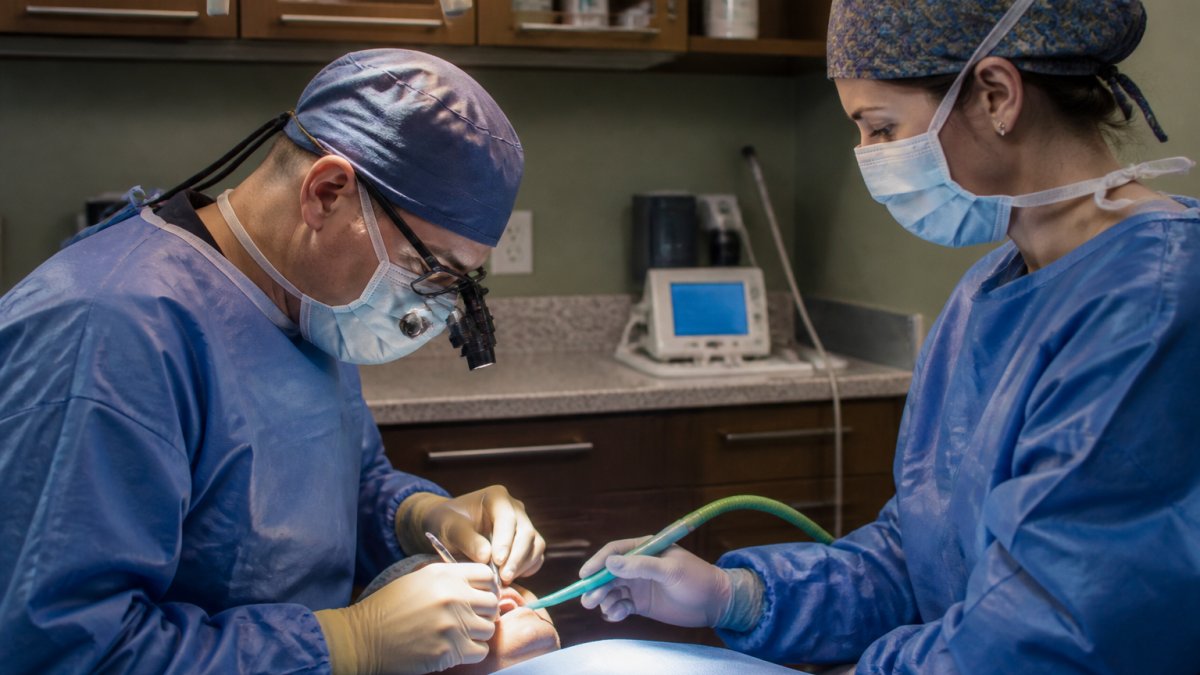
On surgery day, the dentist makes a small incision in the gum tissue to expose the bone, drills a prepared site, and inserts the titanium post. You can browse our dentures and implants services to see the restorations we offer. The incision is closed, and a temporary crown may be placed while the implant heals. Appointment length depends on the number of implants and whether grafting is needed.
What Happens at Each Stage of the Surgical Appointment
Patients often want the surgery broken into smaller steps, because the unknown is what drives anxiety. A typical placement follows this order:
- Numbing and sedation. The dentist administers local anesthesia and, if chosen, sedation. The team waits until the area is fully numb before starting.
- Incision. A small cut opens the gum to expose the jawbone. You may feel pressure or movement, but not sharp pain.
- Site preparation. A series of drills widens the site in graduated sizes to match the implant. This is the step patients most often describe as pressure and vibration rather than pain.
- Post placement. The titanium post is threaded into the prepared site. The dentist checks its position and stability.
- Closure. The gum is stitched closed around or over the implant, depending on the technique. Some cases place a healing cap or temporary restoration at this visit.
Bone Grafting and Extraction When Needed
Not every implant is placed into ready bone. If a tooth is being removed at the same time, the dentist may place the implant immediately into the fresh socket, a technique called immediate placement. If bone volume is low, a graft may be added during the same surgery or as a separate procedure months earlier. Grafting can add time to the appointment and to the healing period before the final restoration, which is why the treatment plan is confirmed only after imaging.
Healing, Osseointegration, and the Restoration Visits
After surgery, the implant site needs time to heal while osseointegration, the process where bone fuses to the implant surface, takes place. Follow-up checks confirm the implant is stable. The restoration phase is completed in later visits, and the overall timeline depends on the individual case, including any grafting, multiple implants, or medical factors.
Watch out: if the dentist finds insufficient bone or an active infection at the surgical visit, the plan may shift to grafting or a delayed placement on the spot, ask before surgery how the team handles that change and what it means for your timeline and cost.
Dental Implant Surgery Duration and What Each Visit Takes
Dental implant surgery duration depends on the number of implants and case complexity. A single implant placement typically requires 30 to 60 minutes, while the complete tooth implant process timeline usually spans 3 to 9 months, according to Matthews Family Dentistry on treatment timelines.
| Visit | Typical Time | What Happens |
|---|---|---|
| Consultation and imaging | 45-60 minutes | Examination, scans, treatment plan |
| Implant placement | 30-60 minutes per implant | Incision, drilling, post placement |
| Healing period | 3-6 months | Osseointegration, follow-up checks |
| Restoration | 1-2 visits | Abutment and final crown fitting |
Anesthesia and Sedation Options in Plain Language
Implant placements commonly use local anesthesia, which numbs the treatment area. Sedation options can be discussed with your dentist, who will recommend what fits your health history.
At Randolph Family Dental, IV sedation is available for nervous patients, and we treat the practice as a judgment-free zone. If needles or the sound of drilling make you uneasy, our page on sedation dentistry for relaxing dental visits explains how the options work. You can also browse the full sedation dentistry services we offer.
Dental Implant Surgery Pain and Comfort During Each Step
Dental implant surgery is performed with the treatment area numbed. Patients commonly describe pressure rather than sharp pain during drilling and placement, and mild discomfort afterward can often be managed with over-the-counter pain relievers recommended by your dentist. But “what will I actually feel” is the question patients ask most, and the honest answer is that sensation varies by step and by person. Here is what a typical experience looks like, described in plain language.
Sensation at Each Stage
- Numbing and sedation. The injection itself is the part most patients dread. A topical numbing gel is often applied first, and the sting is brief. Once the anesthesia takes effect, the treatment area feels numb and heavy.
- Incision. You may feel pressure, tugging, or movement, but not sharp pain. Some patients notice the sensation of the gum being moved even though it does not hurt.
- Drilling and site preparation. This is where sound and vibration are most noticeable. Patients commonly describe pressure, buzzing, and a sense of vibration in the jaw rather than pain. The sound of the drill is often more unsettling than the sensation.
- Post placement. Threading the implant in usually feels like pressure or tightening. The dentist may ask you to bite down or hold still briefly while position is checked.
- Closure. Stitching may produce tugging or pulling sensations. Most patients do not feel the individual stitches.
What Can Make the Experience More Comfortable
Tell your dentist before surgery if you are anxious about needles, the sound of drilling, or holding your mouth open for a long period. Sedation options can be discussed with your dentist, and at Randolph Family Dental, IV sedation is available for nervous patients. If you feel anything sharp during the procedure, say so, the dentist can add more local anesthesia. Your dental team will advise you on when it is safe to eat or drink after surgery.
After the Numbing Wears Off
After the numbing wears off, some swelling, minor bleeding, and bruising may occur for a few days. Your dental team can advise you on aftercare, including cold compresses and soft foods. Over-the-counter pain relievers are commonly enough; if your dentist prescribes something stronger, take it as directed rather than waiting for pain to build.
Watch out: sharp pain during the procedure, pain that worsens after the first week, fever, pus, or an implant that feels loose are not normal recovery sensations, contact your dental team promptly rather than waiting for your next scheduled visit.
Dental Implant Surgery Recovery Milestones and Warning Signs
Dental implant surgery recovery varies by patient. Swelling, stitch care, and osseointegration, the process where bone fuses to the implant, are discussed with your dental team as part of your aftercare plan.
Long-term outcomes are strong. National Dental PBRN registry data indicates 5-year survival rates for dental implants range from about 90% to 96.2%, and success rates are reported at 97% at 10 years.
Watch out: contact your dentist promptly if you develop fever, worsening pain after the first week, pus, or an implant that feels loose. These can signal infection or implant failure and need assessment.
How Medical History and Case Complexity Change the Procedure
Medical history can shape the procedure. Factors such as uncontrolled diabetes, smoking, certain medications, and a history of gum disease can affect healing and may require extra precautions before surgery.
Case complexity matters too. A single implant in healthy bone differs from multiple implants, extraction with immediate placement, or grafting. A Portland Perio Implant Center case example describes combining immediate placement with a bone graft to enhance stability, which shows how planning adapts to anatomy.
Questions to Ask Before You Schedule Your Implant Consultation
Bring a short list to your consultation. Ask how many implants the dentist has placed, what sedation options exist, what the full timeline looks like, and what aftercare involves. Ask about imaging, grafting, and what warning signs warrant a call.
When you are ready, you can make a dental appointment with our team. We will review your history, answer every question, and build a plan around your comfort.
Frequently Asked Questions
How painful is dental implant surgery?
Most patients feel pressure rather than pain during dental implant surgery because local anesthesia numbs the gum tissue and jawbone. Sedation can further reduce awareness if you are anxious. Afterward, mild discomfort, swelling, and bruising are common for a few days and are usually managed with over-the-counter pain relievers your dentist recommends. Severe or worsening pain is not typical and should be reported to your oral surgeon or dentist.
How long does dental implant surgery take?
The length of a dental implant placement depends on the number of implants and the case. The full dental implant process, from consultation through final crown placement, can take several months because the implant body needs time to fuse with the jawbone. Complex cases involving bone grafting or multiple implants can take longer. Your dentist will outline the expected timeline for your specific treatment plan.
What is the most painful day after dental implants?
Discomfort usually peaks in the first 24 to 72 hours after surgery, when swelling is at its highest. Discomfort often peaks in the days shortly after surgery, and symptoms commonly ease after that. Following aftercare instructions, using cold compresses, and taking prescribed or recommended pain relief on schedule can make this window more manageable.
What can I eat after dental implant surgery?
Stick to soft foods for the first few days, such as yogurt, mashed potatoes, soups, and smoothies. Avoid hot, crunchy, or spicy foods that could irritate the implant site. As healing progresses, you can gradually reintroduce solid foods, but avoid chewing directly on the implant area until your dentist confirms it is safe. Good oral hygiene and gentle rinsing support the healing process.
How long does it take to recover from dental implant surgery?
Recovery timelines vary by patient. Swelling and minor bleeding typically resolve over the early recovery period, and complete healing, including osseointegration where the titanium post fuses with the jawbone, takes several months for many patients. Follow-up appointments let your dentist monitor progress and confirm when you are ready for the abutment and final crown.
What should I know before getting dental implants?
Before dental implant surgery, expect a full dental examination, imaging such as 3D CBCT scans, and a discussion of your medical history. Ask about anesthesia and sedation options, the dental implant surgery duration for your case, and what recovery will involve. Knowing the step-by-step process and asking questions at your consultation helps you feel prepared and confident going into surgery.
Dental implant surgery is a staged procedure, and knowing what each visit involves makes it far less intimidating. If anxiety has kept you from starting, Randolph Family Dental offers IV sedation, 3D imaging for precise planning, and full-service care for every member of your family. Get started with Randolph Family Dental and schedule a consultation to map out your implant plan with confidence.
