


Last Updated: November 6, 2026
Quick Summary
To prepare your child for a first dentist visit, set a calm tone days beforehand by using positive words, avoiding terms like shot or pain, reading picture books, and practicing pretend play. Pack insurance cards, forms, a comfort item, and a snack the night before, and schedule a morning slot after a light meal.
- Keep the visit casual and avoid words like shot, drill, or pain.
- You can tour the office ahead of time or meet Dr. Vardeman before the visit.
- A first dental visit is a short, gentle check of the mouth, teeth, and jaw.
- Many offices follow a first visit by age one approach.
- Pack insurance card, photo ID, forms, medicines list, and a comfort item.
Table of Contents
- Step 1: Set the Tone Before the First Dentist Visit
- What to Expect at a Child’s First Dentist Visit
- What to Bring to a Child’s First Dentist Appointment
- Frequently Asked Questions
Step 1: Set the Tone Before the First Dentist Visit
Learning how to prepare child for first dentist visit starts long before you walk into the office. Your child reads your mood, so keep the visit casual and calm.
Try these steps in the days before the appointment:
- Mention the dentist like any normal errand, not a big event.
- Avoid words like “shot,” “drill,” or “pain.”
- Use positive language: “The dentist counts your teeth.”
- Read a picture book about a dental office.
- Practice pretend play with a favorite toy.
- Show your child photos of the office so the space feels familiar.
You can tour our office ahead of time so a nervous child sees where they will go, or meet Dr. Vardeman to show your child a gentle, familiar face before the visit.
If your child has dental anxiety, keep your own voice light. Children pick up on fear fast.
What to Expect at a Child’s First Dentist Visit
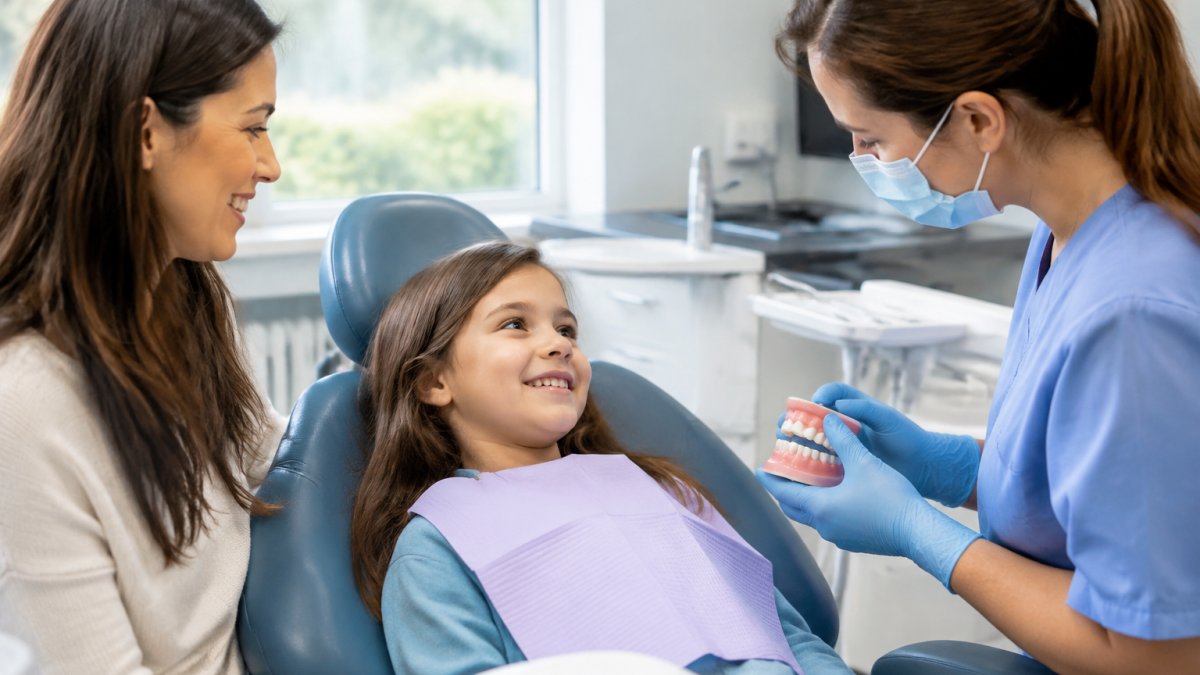
A child’s first dental visit is a short, gentle check of the mouth, teeth, and jaw. The dentist may ask about your child’s health and answer your questions. They may look inside the mouth with a small mirror and brush the child’s teeth, as described in state health guidance on what to expect.
Here is what usually happens:
- You and your child meet the dentist and staff.
- The dentist asks about feeding, habits, and health history.
- Your child sits in the dental chair, often on your lap.
- The dentist counts and checks the primary teeth.
- A gentle teeth cleaning may follow.
- You get tips on oral hygiene and fluoride.

Many offices follow a “first visit by age one” approach. A study on preparing children for a first dental visit looked at parent booklets that explain the visit. A separate study on first dental visit age and reasons examined why children first see a dentist. Ask your dentist what to expect for your child’s age.
What to Bring to a Child’s First Dentist Appointment
Pack a small bag the night before. A simple checklist keeps the morning calm:
- Insurance card and photo ID
- New patient forms, filled out ahead of time
- A list of your child’s medicines and allergies
- Your child’s doctor’s name and contact
- A comfort item like a favorite toy or blanket
- A light snack and water for after the visit
- A change of clothes for a baby or toddler
Find the forms on our new patient information page, then make a dental appointment online once your bag is ready.
A quick look at the whole process:
| Step | What to Do | When |
|---|---|---|
| Set the tone | Use calm, positive words and pretend play | Days before |
| Know what to expect | Ask about the exam and cleaning | Before the visit |
| Pack your bag | Forms, insurance, comfort item, snack | Night before |
| Schedule smart | Pick a morning slot after a light meal | Appointment day |
Most first visits are short. Plan for a calm morning, and keep the rest of the day light.
Frequently Asked Questions
What age should a child have their first dental visit?
Most dental professionals recommend scheduling the first dentist visit by age one, or within six months of the first tooth appearing. Bringing your child early helps establish preventive dental care and lets the dentist check tooth development, jaw development, and early signs of tooth decay. Early visits also help your child get comfortable with the dental office before any problems arise.
Should I stay with my child during their first dental visit?
In most cases, yes. Staying nearby can help a child feel calm and reassuring, especially during a first dentist appointment. Many practices welcome parent involvement and will guide you on where to sit. If your child is older or easily distracted, the dentist may suggest stepping back slightly so the child can focus. Ask the office ahead of time what they prefer.
What if my child cries or refuses the exam?
Crying at a first dentist visit is common and not a sign of failure. Stay calm and reassuring, and let the dentist guide the pace. Many pediatric and child-friendly dentists will pause, use a tell-show-do approach with dental instruments, or finish the exam in a shorter visit. If the appointment cannot be completed, the office may suggest a follow-up. Talk with the dentist about strategies for dental anxiety before the next visit.
Getting a child ready for the dentist takes small, steady steps, and a calm first visit can shape how your child feels about dental care for years. At Randolph Family Dental, we offer pediatric and family care in one place, a judgement-free environment, and IV sedation for anxious patients. Dr. Vardeman and our team are here to make the first visit gentle and reassuring. Get started with Randolph Family Dental and give your child a calm, positive first dental visit.
