


Table of Contents
Last Updated: November 7, 2026
Many patients who avoid the dentist because of fear ask the same question: is IV sedation safe? Many patients ask that question before their first visit. IV sedation uses medication given through a small tube placed in a vein, so the dose can be adjusted during treatment. Here is what it is, how it works and what safety depends on.
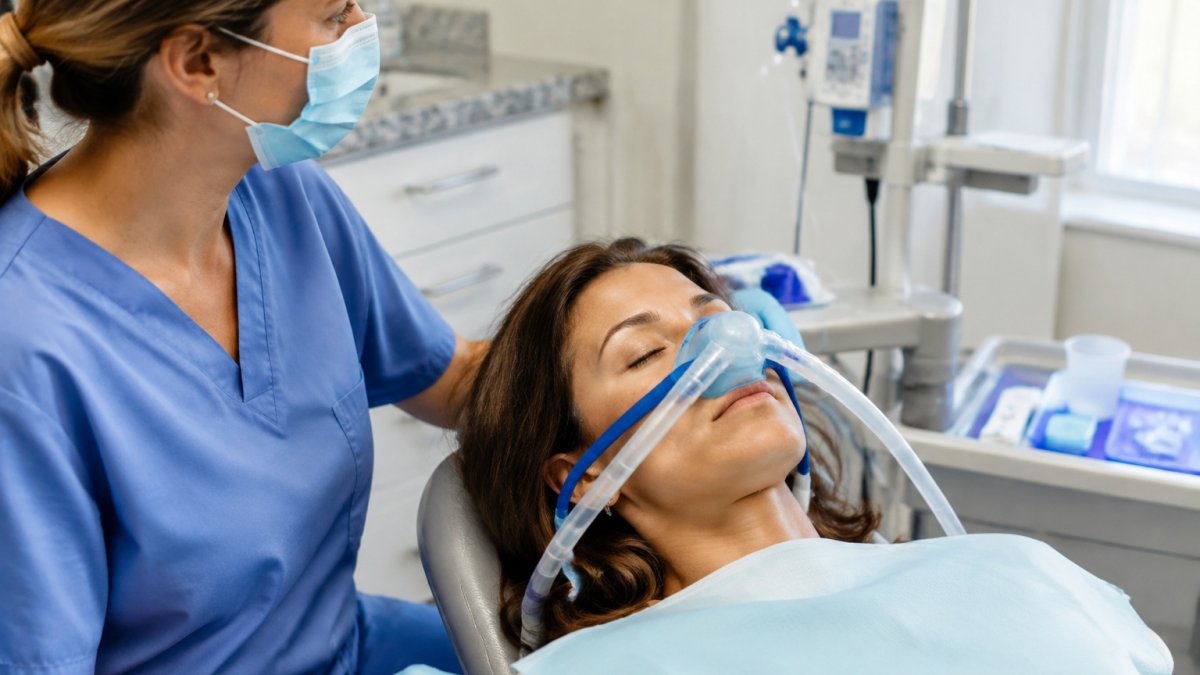
IV sedation is a form of conscious sedation. Medication is delivered directly into the bloodstream through a thin catheter, usually in the hand or arm. Because the medicine acts quickly and can be adjusted, the dentist can keep you relaxed throughout the visit. Most patients stay awake and can respond to instructions, although many remember little of the procedure afterward.
The process generally follows a few steps:
- A health review is completed before the appointment.
- An IV line is placed and the sedative is given slowly.
- Vital signs such as breathing, heart rate and oxygen levels are monitored.
- The sedation is adjusted as needed until the procedure is finished.
- A patient must have a responsible adult to drive them home.
Because the level of sedation can be changed, IV sedation is often described as more controllable than some other options. That control is one reason it is used for patients with severe dental anxiety.
Is IV Sedation Safe for Dental Procedures?
Available research suggests IV sedation can be safe when it is given by trained professionals. A 2011 study found that intravenous sedation given by the operating surgeon for outpatient oral surgery was safe, with a low frequency of complications (Safety of intravenous sedation administered by the operating surgeon in outpatient oral surgery). A separate systematic review of oral surgery under IV sedation with local anesthesia reported less stress and more stable conditions for patients (Systematic review of intravenous sedation in dental implant surgeries).
Safety is not guaranteed, though. Safety depends on the drugs used, the dose, your health and the monitoring during the visit.
Pros of IV sedation:
- Adjustable depth during the procedure
- Patients often remember little of the visit
- Helpful for severe dental anxiety
Cons of IV sedation:
- Requires an IV line and monitoring
- Needs a driver to take you home
- Not appropriate for every patient
IV Sedation Risks and Side Effects to Know About
Every sedative carries some risk, and IV sedation is no exception. The American Society of Anesthesiologists lists headache, nausea and drowsiness as possible side effects (American Society of Anesthesiologists, IV Sedation Risks and Side Effects). Its guidance also notes that moderate or deep sedation can slow breathing, and that oxygen may sometimes be needed.
Common side effects are usually mild and short-lived. They can include drowsiness, mild nausea, dizziness and a sore spot where the IV was placed. Serious complications are less common but can happen, which is why monitoring matters.
Respiratory Depression and Breathing Risks
The most serious concern with sedation is slowed or shallow breathing, called respiratory depression. Sedation should be monitored closely during the visit, and breathing changes can be addressed by adjusting the medication or giving oxygen.
- Patients with sleep apnea or lung disease need extra review.
- Combining sedatives with some other medications can raise risk.
IV Sedation vs. General Anesthesia: How Do They Compare?
IV sedation and general anesthesia both calm patients, but they work differently. General anesthesia puts you fully asleep and usually requires a breathing tube. IV sedation keeps most patients awake and responsive. For many dental visits, IV sedation offers a lighter level of sedation with a faster recovery. The right choice depends on the procedure and your health, so your dentist should compare the two with you.
Who Is a Candidate for IV Sedation and Who Is Not
ASA physical status describes overall health, and patients in higher categories generally need a closer review before sedation is considered. Some people may not be good candidates, including those with certain breathing conditions, pregnancy, or a history of reactions to sedatives.
Tell your dentist about all medications, supplements, allergies and past surgeries. An honest health history is the best way to make sedation as safe as possible.
Scheduling Your IV Sedation Visit: Recovery Time and Next Steps
Patients generally need a responsible adult to drive them home. Your dental team will give you any fasting and recovery instructions before your visit. If you feel unusual pain, trouble breathing or swelling after your visit, seek urgent care right away. You can learn more about how to recognize the signs you need emergency dental care.
If you are ready to talk through your options, make a dental appointment at Randolph Family Dental. Our team can review your health history and answer your questions before any sedation is planned.
Frequently Asked Questions
Is IV sedation safe for anxious patients?
IV sedation may be an option for some anxious patients, and suitability depends on a review of health history and the procedure planned. Your dentist can explain whether it suits you.
How long does IV sedation last?
The effects last for the length of the procedure and usually wear off within a few hours. Most patients need someone to drive them home.
Can I eat before IV sedation?
Most offices ask patients to fast for a period before the visit. Follow the instructions your dentist gives you.
Does IV sedation hurt?
The IV placement can feel like a brief pinch. Most patients feel relaxed and comfortable during the procedure.
Frequently Asked Questions
Is IV sedation safer than general anesthesia?
IV sedation and general anesthesia are different levels of drug-induced care, so neither is automatically safer in every case. IV sedation keeps most patients breathing on their own and responsive to verbal cues, while general anesthesia renders patients fully unconscious and usually requires a breathing tube. Research on outpatient oral surgery has generally found IV sedation can be used safely with trained providers. Your dentist can explain which option fits your procedure and health history.

Am I fully asleep during IV sedation?
Most patients are not fully asleep during IV sedation. Many feel deeply relaxed, drowsy, or may drift in and out of awareness, and they often have little memory of the procedure afterward. The depth of sedation can be adjusted during treatment, and patients usually respond to simple instructions. Patients who want to know exactly what to expect should raise this question during a consultation at Randolph Family Dental.
Can IV sedation cause serious harm at the dentist?
Serious complications from IV sedation are uncommon when it is given by a trained professional with proper monitoring, but they are not impossible. Possible side effects include headache, nausea, and drowsiness, and moderate or deeper sedation can slow breathing, which is why oxygen and continuous monitoring matter. Patients should discuss their medical history openly before any sedation.
Is IV sedation safe for children?
IV sedation can be used for some children, but suitability depends on age, health status, and the planned procedure, and it requires careful assessment by a qualified provider. Parents should ask how their child will be monitored and what emergency equipment is available before agreeing to sedation.
