


Last Updated: November 4, 2026
Quick Summary
Yes, IV sedation helps dental anxiety. A 2025 review of sedation protocols in dentistry found that patients receiving IV sedation showed the fastest onset and the highest anxiety reduction compared to other sedation methods. IV sedation calms the nervous system while local anesthesia numbs the treatment area.
- A 2026 BMC Oral Health study linked dental anxiety to higher propofol requirements during intravenous sedation.
- Expect a specific fasting window and a responsible adult who must drive you home and stay with you.
- The team places a small IV line, usually in the back of the hand or inner elbow, and connects monitoring.
- IV sedation onset is fast, within minutes, and the dose is adjustable during treatment.
- Common side effects include drowsiness lasting several hours, nausea, headache, dry mouth, and brief amnesia.
Table of Contents
- How IV Sedation Calms Severe Dental Anxiety
- IV Sedation Dentistry: What to Expect From Consultation to Recovery
- What Drug Is Used for IV Sedation in Dentistry?
- Is Dental Sedation Dangerous? Safety, Risks, and Precautions
- IV Sedation vs. Oral Sedation: Which Fits Your Level of Fear?
- Who Is a Candidate for IV Sedation, and How Clinicians Decide
- Non-Medication Strategies That Work Alongside Sedation
- Questions to Ask Before Scheduling Your Sedation Visit
- Frequently Asked Questions
How IV Sedation Calms Severe Dental Anxiety
Yes, IV sedation helps dental anxiety, and the clinical evidence is stronger than most people expect. According to a 2025 review of sedation protocols in dentistry, patients receiving IV sedation showed the fastest onset and the highest anxiety reduction compared to other sedation methods. That matters if you have put off care for years.
At Randolph Family Dental, we offer IV sedation for anxious patients as part of a judgement-free approach to care. Below, we explain what the medication does, what a visit feels like, and how to prepare.
Anxiety Relief, Consciousness, and Pain Control Are Not the Same Thing
This is where most guides blur the lines. Three separate things happen during a sedation visit:
- Anxiety relief: the sedative medication calms the nervous system.
- Consciousness: you stay in a relaxed, conscious sedation state rather than general anesthesia.
- Pain control: local anesthesia numbs the treatment area.
IV sedation does not numb your teeth. Your dentist still uses local anesthesia for that. What IV sedation changes is how your body reacts to the dental procedure itself.
A 2026 study in BMC Oral Health found that dental anxiety was linked to higher propofol requirements during intravenous sedation. In plain terms: more fear can mean more medication to reach the same calm.
IV Sedation Dentistry: What to Expect From Consultation to Recovery
IV sedation dentistry follows a predictable path, which is often the most reassuring part. Here is the step-by-step process from first visit to full recovery, with what actually happens at each stage.
Step 1: Consultation and medical history review. Your dentist reviews medications, conditions, and prior dental experiences to determine whether IV sedation is appropriate for you. This visit is also where you discuss your fear triggers and agree on a stop signal.
Step 2: Pre-appointment instructions. You receive fasting and transportation guidance, usually a few days before the appointment. Expect a specific fasting window, a rule that a responsible adult must drive you home and stay with you, and instructions about which regular medications to take or skip. Follow these exactly; they are the safety foundation for the entire visit.
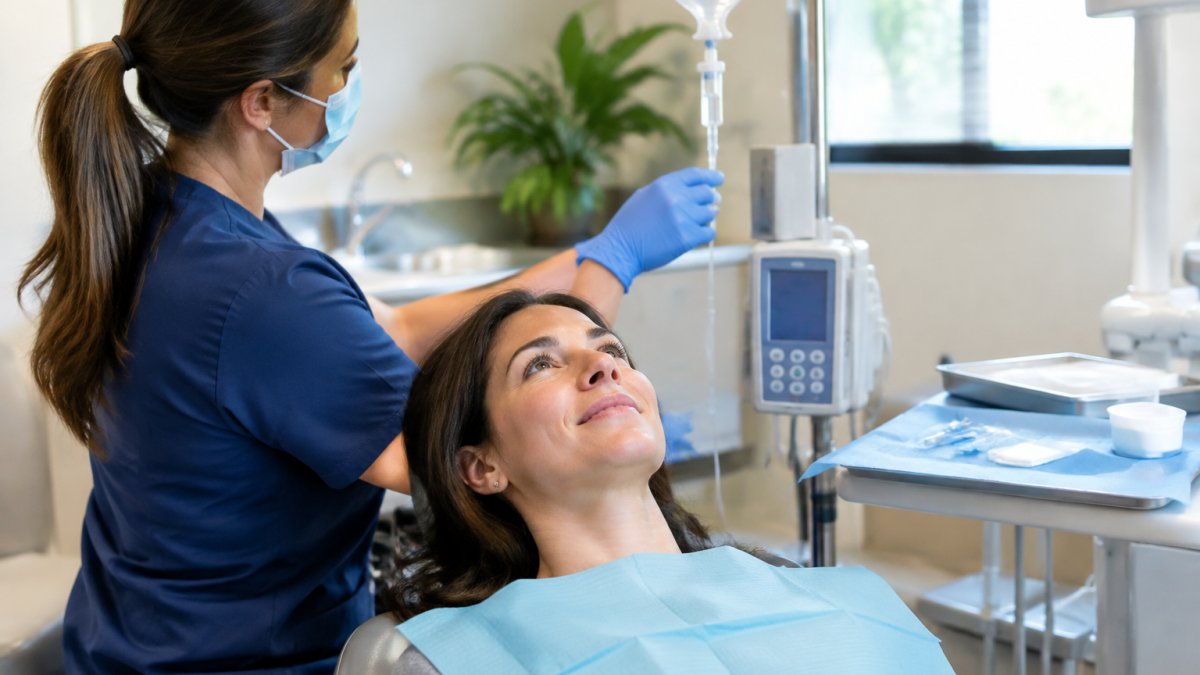
Step 3: Placement and monitoring. On appointment day, you arrive with your escort. The team places a small IV line, usually in the back of the hand or inner elbow, and connects monitoring: blood pressure cuff, pulse oximeter, and often a capnography sensor or precordial stethoscope to track breathing. Baseline vital signs are recorded before any medication is given.
Step 4: Treatment. The dentist administers the sedative in small, titrated doses until you reach the target level of relaxation, then begins treatment. Local anesthesia is still used to numb the treatment area. Throughout, the dentist or a dedicated monitor adjusts the sedation level as needed and tracks your responsiveness.
Step 5: Recovery. After treatment, you rest under observation in the office until vital signs are stable and you can sit up, respond appropriately, and in many practices walk with assistance. Recovery time varies with the medications used and the length of treatment, so your team will tell you when you are ready to go home. Your escort drives you home and stays with you for the rest of the day.

The man is American.
A common pattern is that the consultation and preparation steps take more calendar time than the treatment itself, so plan for a short pre-op visit and a full half-day blocked out for the sedation appointment and recovery. Our new patient information page covers what to bring and how to prepare.
What Drug Is Used for IV Sedation in Dentistry?
Several sedative medications are used in dentistry, and the choice depends on your individual needs. Your dentist will explain which medication is planned for you.
Your dentist chooses based on:
- Your medical history
- Procedure length
- Your level of fear
- Prior reactions to sedatives
Midazolam belongs to a class called benzodiazepines. It creates calm and reduces anxiety, and it can produce partial memory loss of the visit. Propofol works faster and clears quickly.
IV sedation is not automatically the right choice for everyone. Your clinician weighs the options with you.
Is Dental Sedation Dangerous? Safety, Risks, and Precautions
Dental sedation carries risks, and it is important to understand them before your appointment. Being clear about that, and about why the safety measures exist, is part of good care.
Common side effects include:
- Drowsiness that lasts several hours
- Nausea
- Headache
- Dry mouth
- Brief amnesia of the visit, which many patients find welcome
Serious complications are uncommon but possible (pubmed.ncbi.nlm.nih.gov). The main one is respiratory depression, where sedative medications slow breathing more than intended. This is the reason for continuous monitoring: a pulse oximeter catches falling oxygen saturation before it becomes an emergency, and capnography or direct observation catches shallow breathing even earlier. Allergic reactions to sedatives are rare but are another reason a full medical history is taken in advance.
Precautions that dental care teams commonly take include confirming your medications and conditions beforehand, monitoring vital signs and breathing during treatment, and releasing patients only when stable. Ask your dentist which precautions the practice follows.
Risk is individualized, not one-size-fits-all. Clinicians assess whether IV sedation is appropriate by weighing your medical history, current medications, health conditions, and the procedure itself. Conditions that commonly prompt extra caution or a different setting include:
- Untreated or severe sleep apnea
- Significant heart or lung disease
- Pregnancy
- Certain drug interactions, including some antidepressants and opioids
- Very young or very old age
- A history of adverse reactions to sedation
Tell your dentist about sleep apnea, heart conditions, pregnancy, or any medication you take. That information shapes the safety plan, and in some cases the right answer is a different sedation approach or referral to a specialist setting rather than IV sedation in a general dental office. Your clinician may recommend a less invasive option, such as oral sedation, depending on your health and needs.
IV Sedation vs. Oral Sedation: Which Fits Your Level of Fear?
IV sedation and oral sedation are the two main sedation options, and the right fit depends on your level of fear and the procedure.
| Feature | IV Sedation | Oral Sedation |
|---|---|---|
| Onset | Fast, within minutes | Slower, often 30-60 minutes |
| Dose adjustment | Adjustable during treatment | Fixed once taken |
| Monitoring | Continuous, in-office | Limited before arrival |
| Best for | Severe anxiety, long procedures | Mild to moderate anxiety |
| Memory of visit | Often minimal | Varies |
Patient experience varies, and IV sedation is often discussed as an option for more severe anxiety. Your dentist can help you compare the options for your situation.
Oral sedation may suit shorter visits or milder nerves. It is also easier to arrange. Our sedation dentistry options show what we offer.
Who Is a Candidate for IV Sedation, and How Clinicians Decide
Candidates for IV sedation are typically assessed individually, and clinicians decide case by case.
Your dentist assesses:
- Medical history and current medications
- Severity of dental anxiety
- Procedure length and complexity
- Prior sedation experiences
- Age and overall health
A sensitive gag reflex is a common reason. So is a history of avoiding the dentist for years. Patients who need several treatments in one visit often benefit too.
Some conditions require extra caution or a different approach. That is a conversation for a consultation, not a decision to make alone. Dr. Fortuna Vardeman leads the practice, and you can meet Dr. Vardeman before deciding.
Non-Medication Strategies That Work Alongside Sedation
Many people find that stress-management strategies help alongside sedation. These can help lower anxiety before you arrive.
- Tell the team your triggers. Sounds, smells, and the sight of instruments are common ones.
- Agree on a stop signal. A raised hand lets you pause without speaking.
- Use slow breathing. Four counts in, six counts out.
- Bring headphones. Music or a podcast masks drill noise.
- Schedule early. Morning appointments leave less time to worry.
- Visit beforehand. A short walk-through removes unknowns.
These do not replace sedation. They make the whole dental visit feel more predictable.
Questions to Ask Before Scheduling Your Sedation Visit
Ask these questions before you book, and you will know whether a practice is set up for anxious patients.
- Who monitors me during treatment, and what training do they have?
- What monitoring equipment do you use?
- How do you adjust the sedation depth if I need more or less?
- What are the fasting instructions for my appointment time?
- What should I expect during recovery, and when can I drive again?
- What happens if I feel panicky before the appointment?
- How do you handle a strong gag reflex?
Write the answers down. If a practice cannot answer clearly, keep looking.
When you are ready, you can request a dental appointment and ask these questions directly. Our sedation dentistry overview explains how we calm severe dental anxiety.
Frequently Asked Questions
Does IV sedation put you to sleep during dental work?
Usually not. IV sedation is conscious sedation, meaning you stay responsive enough to follow simple instructions but relaxed enough that many patients doze off and remember little of the appointment. The sedation depth can be adjusted during the visit. Pain control still comes from local anesthesia, so the numbing injection is what blocks discomfort, while the IV medication lowers anxiety and helps with a sensitive gag reflex. Ask your dentist to explain the planned level of sedation before treatment begins.
Is IV sedation safe for patients with high anxiety?
IV sedation is delivered by a trained clinician with monitoring during treatment. Your medical history, medications, and airway are reviewed first, and vital signs are tracked throughout. Some patients with certain health conditions may need medical clearance or a different sedation option. Bring a complete medication list to your consultation so the team can confirm whether you are a candidate.
How is IV sedation different from oral sedation?
Oral sedation is a pill taken before the appointment. It is convenient but slower and harder to fine-tune once swallowed. IV sedation delivers sedative medication directly into a vein, so onset is fast and the adjustable sedation level lets the clinician deepen or lighten sedation as the procedure changes. Patients and dentists weigh these options differently depending on the procedure and the patient’s needs.
What should I do to prepare for an IV sedation appointment?
Follow your dentist’s pre-appointment instructions carefully, which may include fasting, arranging a responsible adult to drive you home, and wearing comfortable clothing. Skip alcohol and recreational drugs beforehand, and tell the team about every medication and supplement you take. Plan a quiet rest of the day afterward, since drowsiness can linger for several hours. Do not drive, operate machinery, or make important decisions until the effects fully wear off.
If fear of the dentist has kept you from care, you do not have to white-knuckle your way through another visit. Randolph Family Dental offers IV sedation alongside state-of-the-art technology and a judgment-free approach, with care for the whole family in one place. Get started with Randolph Family Dental and schedule a visit where comfort comes first.
